Chalk Lines and Conviction: Why Nothing Fits Off the Rack
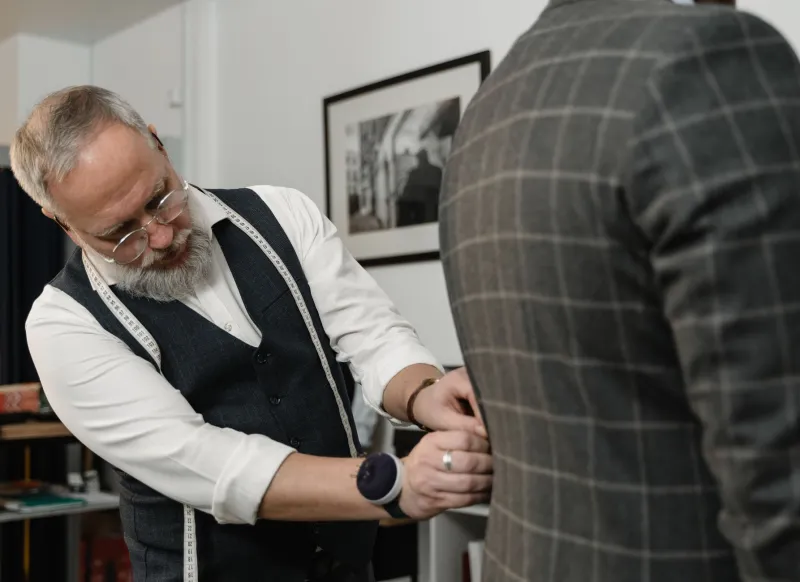
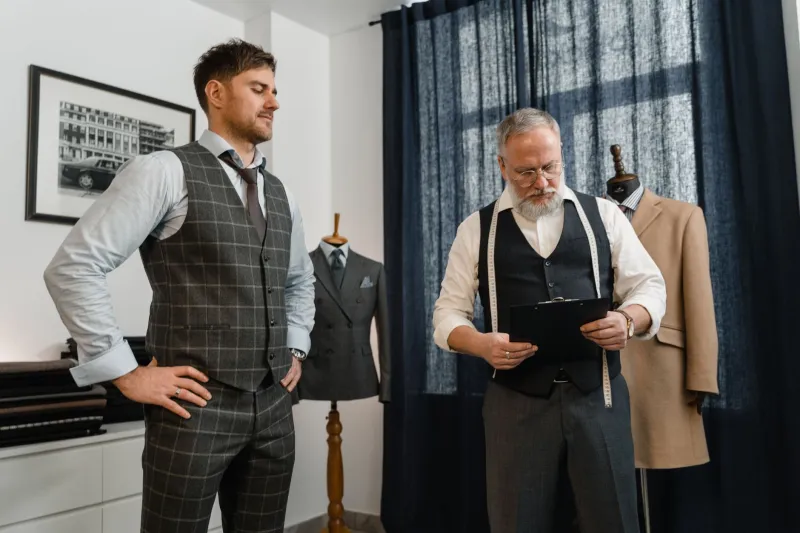
Let us dispense with a polite fiction. There is no such thing as off the rack. There is only clothing that has not yet been introduced to your body, and clothing that never will be. The racks of Melbourne's boutiques and department stores are full of the former masquerading as the latter, and the gap between the two is closed — when it is closed at all — in small workrooms above shops and behind curtain factories from Brunswick to Bentleigh.
Marion Melbourne's position is blunt: the tailor's chalk mark is where style actually begins. Everything before it is procurement.
The Myth of the Average Body
Ready-to-wear exists because industry pattern-makers draft to a statistical average — a body that exists in aggregate and nowhere in particular. Shoulders, in particular, are the great betrayer. A jacket can be correct through the chest and sleeve and still sit wrong at the shoulder seam by two centimetres, and those two centimetres are the difference between a garment that looks made and a garment that looks bought.
No amount of price resolves this. A $2,000 coat with an unaltered shoulder reads worse than a $300 coat with a corrected one. The expensive garment flatters the maker; the altered one flatters the wearer. This is not a fringe observation. It is the operating assumption of every well-dressed person over sixty in this city, most of whom learned it the unfashionable way.
Three Workrooms, Three Waiting Lists
Consider the people who do this work. In Essendon, a tailoring room run by the same family for three decades takes in trousers shortened for $30 to $45 depending on cuff construction, and is booked out roughly a fortnight ahead at the change of each season. In Preston, a former garment-industry machinist now reshapes vintage dresses and wedding gowns, her prices rising with the intricacy of the beading rather than the label inside. And in the eastern suburbs, a men's alteration specialist — trained, he notes, in the era when suits were cut to be altered — quietly adjusts the shoulders of jackets for fees that would surprise anyone who assumed craftsmanship had left the country.
What unites them is the diary. The good ones are not struggling for work; they are rationing it. Book in the first week of March for a winter coat and you will be wearing it by Anzac Day. The lesson is not that alterations are hard to find. It is that everyone who dresses well already knows about them, and the queue reflects the knowledge.
The Arithmetic of Elegance
Here is the argument in full. A wardrobe of moderate cost, altered to fit, will outperform — in appearance, longevity, and dignity — a wardrobe of double the cost, unaltered. Budgeting fifteen per cent of a garment's price for adjustment is not an extra expense. It is the cheapest quality upgrade available in Australian fashion, and it is almost universally unbudgeted.
The objection is always time. Alterations require a second visit, a second fitting, patience. Quite right. But 'fast' was never the promise of good dressing; it was the concession. The garment that fits is the one you reach for, year after year, and the cost per wear of a chalk-marked pair of trousers collapses toward nothing.
A Modest Proposal
So: buy less, and finish what you buy. Take the new coat to a workroom before its first wear, not after its first regret. Learn the name of the person who holds your pins. Melbourne has the tradespeople; what it lacks, mostly, is customers who plan for them.
Off the rack is where the transaction ends. The chalk line is where the garment starts.