Skirts on Flinders Lane: Auditing Fashion's Oldest Economic Superstition
In 1926, an American economist named George Taylor observed that skirt hemlines seemed to rise in prosperous times and fall in lean ones, and fashion has never quite shaken off the accusation. The 'hemline index' — a theory with all the rigour of a horoscope and twice the longevity — holds that the stock market and the knee move in concert. When the economy soars, so does the hem; when recession bites, fabric follows gravity.
It is a delightful theory. It is also, on the evidence of Melbourne's streets in the winter of this cost-of-living cycle, largely nonsense.
The Fieldwork
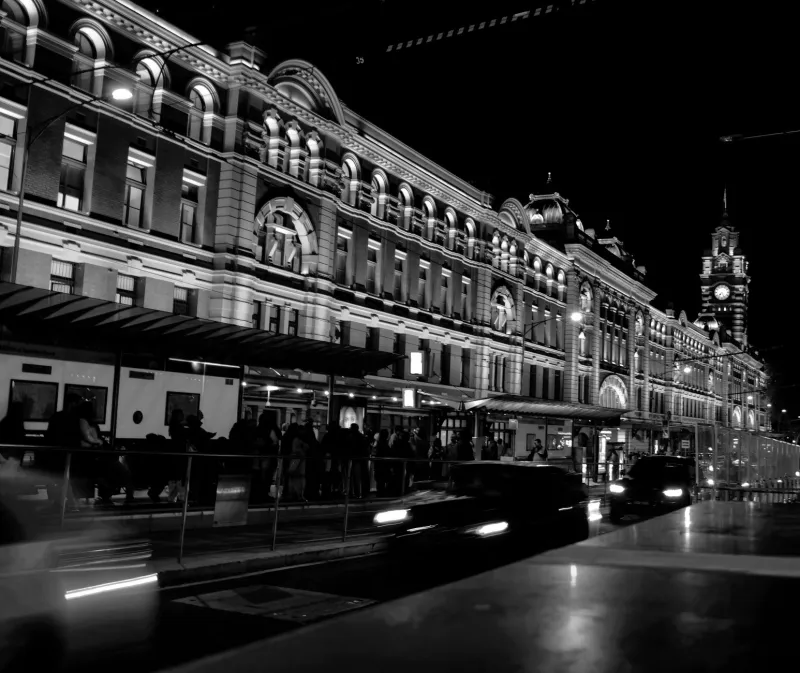
Stand at the corner of Flinders Lane and Exhibition Street at lunchtime and you will see everything: floor-skimming wool, mid-calf denim, the occasional defiant mini paired with opaque tights and a coat that costs more than the average weekly wage. Walk to Fitzroy and the mix only widens — vintage slip dresses over thermals, long-line skirts from the op-shop renaissance, hemlines at every altitude simultaneously.
If hemlines were an economic indicator, Melbourne would be signalling boom and bust in the same city block.
This is not to say the street is mute. It is saying something — just not what Taylor thought.
What the Designers Say
Speak to local designers and a more interesting picture emerges. Several independent makers we spoke to describe a shift not in hemline but in intention. Customers are buying fewer pieces, they report, and asking harder questions: where is this made, how long will it last, will it survive three winters or one?
The downturn, in other words, does not shorten the skirt. It changes the buyer. Volume contracts; quality does not. A designer producing small runs in Brunswick notes that her most expensive pieces have held steady while her impulse-priced items have stalled. The wardrobe is not shrinking — it is concentrating.
The Rise of the Quiet Statement
What the hemline index misses entirely is the phenomenon now so thoroughly entrenched it barely registers as a trend: quiet luxury. In straitened times, the visible flex has migrated from silhouette to substance. The tell is no longer how much leg is on display but how good the wool is, how clean the seam, how well the coat has aged.
Melbourne, perhaps, was always primed for this. A city whose style culture was built on laneway boutiques, black-on-black, and a certain suspicion of logos was never going to answer an economic squeeze with a hemline. It answers with a better coat, worn for a decade.
One might call this the longevity index: as confidence falls, the average age of garments in circulation rises. It is less catchy than Taylor's theory, but it has the advantage of being true.
Why the Myth Persists
The hemline index survives because it flatters us. It suggests fashion is a seismograph, that what we wear is a collective unconscious registering the economy's tremors. There is romance in the idea that a thousand individual wardrobe decisions might add up to a market signal.
But the causality runs the other way, and more prosaically. Designers choose hemlines seasons in advance; the economy merely decides whether we can afford them. What changes in a downturn is not the hemline but the purchase — and increasingly, the refusal to purchase at all.
The woman on Flinders Lane in her floor-length vintage wool is not forecasting anything. She is simply dressed well, in a coat she intends to keep. In 2020s Melbourne, that may be the most radical economic statement of all.