When the Coat Comes Home: What a Return Can Teach a Pattern

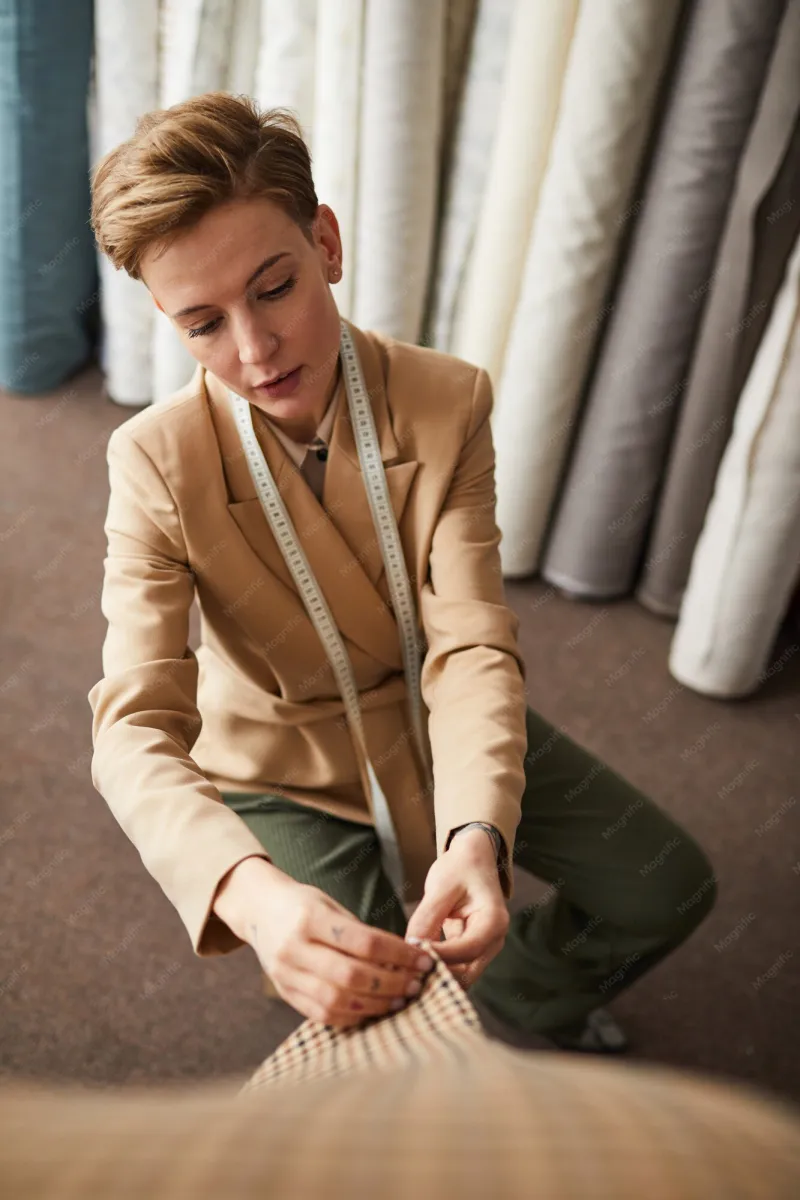
Photo: tailor examining returned coat in design studio workroom, via img.freepik.com
There is a particular silence in a design studio the week after a collection launch. The rack is thinned, the invoices are filed, and the garments have gone — to Armadale, to Perth, to a wedding in the Yarra Valley. For a fortnight, the studio belongs entirely to the designer's own convictions.
Then the phone rings. A sleeve has twisted. A hem has caught on a bicycle chain in Brunswick. A customer in Adelaide says the coat is beautiful, truly, but she cannot raise her arm to hang washing in it, and could someone please explain what happened.
What happened, of course, is that the garment left the atelier and entered a life. And the life, as any honest Melbourne designer will tell you, is the second fitting.
The Fitting Room That Never Closes
In the first fitting, the model stands still. She turns when asked. She does not carry a laptop bag, drive to Geelong, or endure a February northerly on a tram stop with no shade. The second fitting — the one conducted by the customer, unsupervised, over months — is far more rigorous, and its verdicts arrive by email, by appointment, and occasionally by registered post.
The designers we spoke to treat these verdicts as data of the highest quality. A returned garment is not a failure; it is a garment that has completed its field testing. One Fitzroy label keeps a dedicated rail for returned pieces, annotated with tags in pencil: left shoulder too narrow after winter coat worn over knit, buttonhole frayed — replace with bound, customer 1.62m, hem dragged on wet pavement.
That last note is the most Melbourne of the three. Our pavements are wet half the year, and a hem that behaves in a studio under warm light behaves very differently above a Swanston Street gutter.
The Appointment With No Name
Boutique owners know a category of visit that has no official name. The customer books an alteration or a repair, arrives with the garment, and begins, hesitantly, with the phrase: I don't know what happened.
Nothing happened. That is the point. The garment was right in the room and wrong in the world, and the gap between those two states is where a label's real education takes place.
A thoughtful boutique owner on High Street describes these appointments as the most valuable market research money cannot buy. No survey, no focus group, no analytics dashboard will ever tell a designer that their signature cuff sits badly on a wrist that types at a desk for eight hours. Only a customer standing in the fitting room, sleeve pushed up, slightly apologetic, can deliver that intelligence.
The wise designer listens without defending. The wiser one takes notes.
From Complaint to Pattern Block
Here is the part of the process the customer rarely sees. A return is logged. A pattern is pulled from the archive drawer. And somewhere between the complaint and the cutting table, the correction is made — quietly, without announcement, in the next season's draft.
The armhole that restricted a customer hanging washing becomes, eighteen months later, a sleeve with a higher cap and a gusset no one will ever notice. The buttonhole that frayed in the rain becomes a bound finish across the entire range. The hem that dragged becomes a deeper turn, weighted, for a city that walks everywhere in weather.
None of this appears in the marketing. There is no press release titled We Were Wrong About the Shoulder. And yet this invisible ledger — of returns, repairs, and unnamed appointments — is arguably the truest record of a label's development. The archive drawer of corrections outlasts any single collection.
A Defence of the Return
There is a temptation, in fashion, to treat the return as an insult. The garment was perfect; the customer changed her mind; the weather turned. This reading flatters the designer and teaches them nothing.
The alternative reading is humbler and more productive: the garment was right for the studio and insufficient for the life. Melbourne — with its four seasons in an afternoon, its tram commutes, its formal-to-casual whiplash between office and evening — is a particularly demanding examiner. A garment that survives a year here has earned its place in a pattern book.
So the next time a designer mentions, almost in passing, that this season's coat has a slightly deeper armhole, a bound buttonhole, and a hem with more presence than last year's — know that you are not looking at inspiration. You are looking at a correction. Someone hung washing in the last one, and the label had the grace to learn.
The second fitting, it turns out, never really ends. It simply changes hands.