The Ground Floor of Elegance: A Case for Building the Wardrobe from the Shoes Up
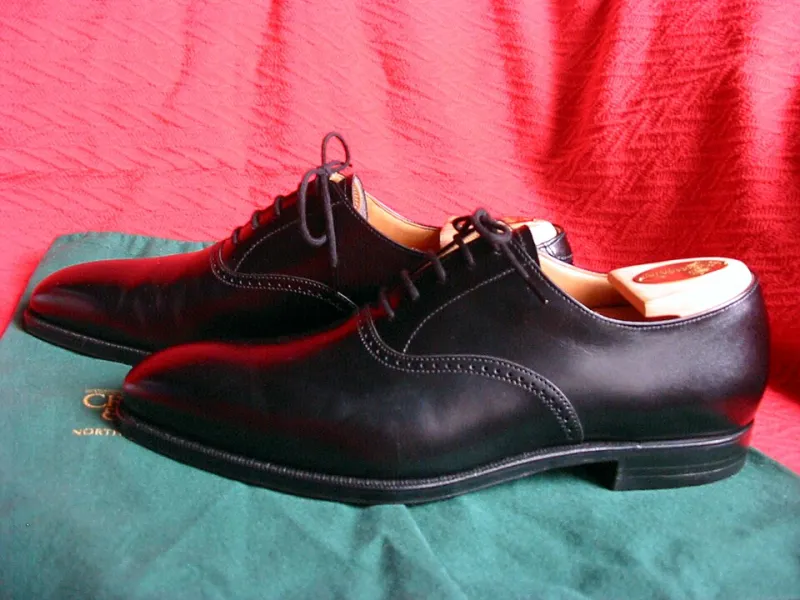
Photo: OlafJanssen, CC BY-SA 3.0, via Wikimedia Commons
There is a familiar sequence to the Melbourne wardrobe crisis. It begins with the coat — considered, researched, justified. It continues with the layers beneath it. And it ends, usually around 8.40am on a Collins Street corner, with a person in a beautifully cut mac glancing down at shoes that were never designed for the day ahead.
We submit that this order of operations is precisely backwards. If the wardrobe has a hierarchy, footwear sits at its base — not because it is humble, but because it is load-bearing. Everything above it depends on what is underneath.
The Test No Lookbook Ever Mentions
Consider what we actually ask of a shoe in this city. In a single afternoon it may cross the polished concrete of a Flinders Lane foyer, the pavers of a laneway that has not been re-laid since the seventies, and the wet steel of a tram platform — all while the sky cycles from brilliant to sideways rain with the casual cruelty of a southerly change.
No garment in the closet faces a comparable examination. A coat is judged in stillness. A dress is judged in a room. A shoe is judged in motion, under load, on surfaces that are actively hostile to it.
And yet the shoe is almost always the last thing considered and the first thing economised upon. This is a category error, and it shows.
Bluestone Does Not Forgive
To test the proposition, we spent a wet week comparing soles on the bluestone pitches that define so much of the CBD's foot traffic. The findings were unglamorous and conclusive.
Leather soles, elegant as they are, turned treacherous on wet bluestone within minutes of rain. Rubber soles — particularly the denser compounds favoured by local makers — held their line with a quiet confidence that no aesthetic argument could outweigh. The compromise, as any decent cobbler will tell you, is a leather sole with a rubber top piece: the appearance of tradition with the grip of sense. Several of Melbourne's repair rooms fit them as a matter of course, and we would argue the twenty-odd dollars involved is the best value in Australian fashion.
This is not a brief against leather soles. It is a brief against buying footwear for the version of Melbourne that exists in campaign imagery rather than the one that exists on the 96 tram.
The Makers Who Never Left
Melbourne retains something most cities have surrendered: a working cobbler class. In the arcades off the CBD, and in modest workshops in Collingwood, Brunswick and Footscray, there are still people who resole, stretch, rebuild and — increasingly — make from scratch.
What distinguishes the local shoemaker from the local label is the relationship to time. A garment is bought once and worn often. A shoe, properly maintained, is a rolling project: resoled every few years, heels replaced, uppers nourished back from the dead each winter. The cobbler is not a repair service but a collaborator in a decade-long garment.
Talk to these makers and a consistent philosophy emerges. They would rather fit one pair properly than sell three badly. They ask about your commute, your gait, the width of your heel — questions no checkout page has ever thought to pose. It is fitting-room logic applied to the ground, and it is quietly radical in a retail culture that treats shoes as an impulse category.
Three Pairs, Honestly Chosen
The argument, then, is not merely for better shoes but for fewer. We would propose a discipline: three pairs, chosen with the seriousness one usually reserves for a coat.
The daily pair. Leather, resoleable, rubber-topped, in a colour that forgives rain and scuff. It should survive five wearings a week and look better in year three than in week three.
The weather pair. Something with genuine grip and water tolerance, unembarrassed to be seen in a downpour. Elegance that cannot survive rain is not elegance; it is costume.
The evening pair. The one indulgence permitted. But even here, the rule of resoleability applies — if a cobbler cannot save it, it is not an investment, it is a rental you have already paid for.
Three pairs, properly maintained, will outlast and outperform a rotation of a dozen compromise purchases. The arithmetic is not subtle. The wardrobe becomes calmer; the mornings become shorter; the feet become, over years, something closer to contented.
From the Ground Up
There is a broader principle here that extends past footwear. The garments we wear most confidently are the ones built to meet the day as it actually is — not as a lookbook imagines it. Melbourne, with its four-seasons-by-lunchtime temperament, punishes anything else.
So the next time an outfit fails, resist the instinct to look upward at the coat. Look down. The problem, more often than not, began at the pavement — and so, properly understood, does the solution.
The elegant Melbourne wardrobe is not assembled from the top down. It is built, like this city's laneways, from the ground up — bluestone first, everything else after.