Listen Before You Look: The Fabric Vocabulary Melbourne Shops Forget to Teach

Photo: Basile Morin, CC BY 4.0, via Wikimedia Commons
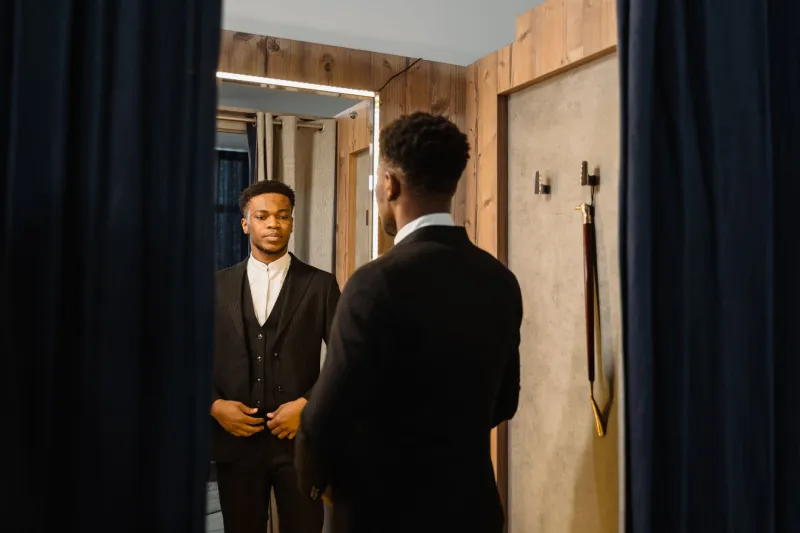
There is a moment, familiar to anyone who has lingered in a good fitting room, when the mirror becomes secondary. You turn, and the garment answers — not with its colour, not with its cut, but with a sound. The dry whisper of a fine wool suiting. The crisp, almost conversational rustle of washed linen. The hush of heavy silk settling against itself. Most of us register these noises without naming them, and fewer still let them inform the purchase. This is, I would argue, a genuine failing of the modern Australian shopper — and one the industry has quietly encouraged.
The Tyranny of the Visual
Australian fashion culture is overwhelmingly visual. We are a nation of online carts and camera-ready silhouettes, of garments purchased from flat-lay photographs and judged by how they photograph rather than how they live. The consequence is a wardrobe full of clothes that look adequate on a screen and behave poorly in the street. Fabric that stiffens rather than drapes. Weaves that cling with static instead of falling with intent. Materials that announce themselves not with elegance but with a plastic yawn.
The eye, it turns out, is the easiest of our senses to deceive. Print, colour and cut can flatter almost any textile. Sound cannot be faked so readily. A cheap polyester twill has a particular flat, dead rustle — a sound like crisp packet shorthand — that no amount of clever styling can disguise. A well-milled wool, by contrast, speaks in low tones. This is not mysticism; it is physics. Dense, long-stapled fibres and honest weave structures produce particular acoustic signatures, and the ear picks them up even when the eye has been charmed.
Two Voices from the Trade
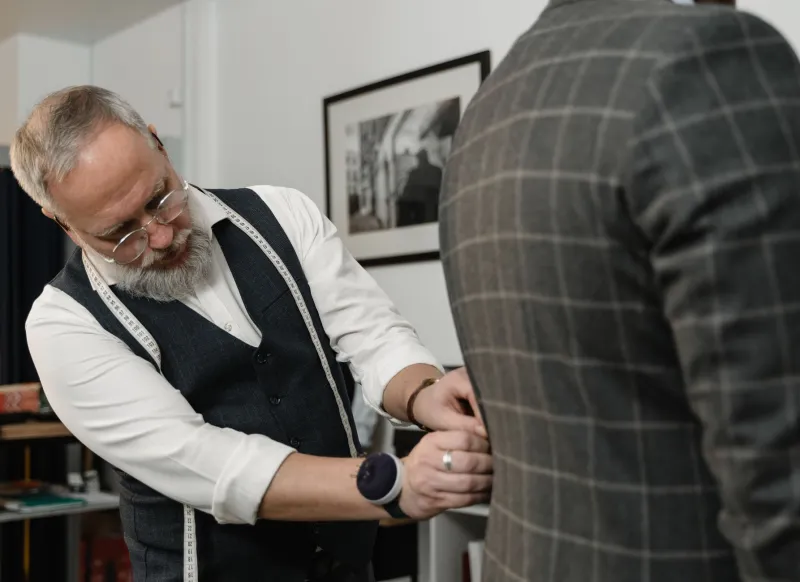
To test this thesis, I spent an afternoon with two people who make their living from cloth. The first, a third-generation textile importer whose Collingwood showroom receives rolls from Biella and Kyoto in equal measure, puts it bluntly: "The eye buys once. The ear buys for a decade. When a client runs a suiting through their fingers and it crackles like cellophane, they hear what they're about to regret."
His counterpart, a designer whose studio sits above a Flinders Lane arcade, has gone further — she auditions fabrics aloud before committing to a pattern. "I drape every candidate over a dress form and walk it around the room," she told me. "If it whispers, it stays. If it rattles, it goes. Linen should rustle like a page turning. A heavy crepe should be nearly silent — a fabric that quiet has weight and weight has intention."
Both make the same point from different ends of the supply chain: Australians, perhaps because our fashion education is thin and our retail environment dominated by volume, have lost the sensory vocabulary that once came with visiting a draper. We say a garment "feels cheap" without being able to say why. Often, the why is audible.
A Shopper's Glossary
Consider this a starter kit — terms to carry into the next fitting room.
- Rustle — the crisp, dry sound of natural plant fibres, most honestly expressed in linen and crisp cotton poplin. A good rustle is lively but not metallic; think of it as the fabric's laughter.
- Whisper — the soft exhalation of fine wool or brushed suiting as it moves against itself. Whisper is the mark of drape; if a jacket whispers when you turn, it will fall well when you stand still.
- Hush — the near-silence of dense weaves: heavy crepe, double-faced wool, quality denim. Hush signals weight and structure. A garment that hushes is a garment with presence.
- Rattle — the flat, papery clatter of low-grade synthetics. Rattle is the single most reliable warning in the acoustic repertoire. Walk away.
- Sigh — the gentle collapse of silk as it settles. True mulberry silk sighs; imitations crinkle.
Toward an Audible Wardrobe
None of this requires abandoning the visual — a beautiful garment should be a pleasure in every register. But it does suggest a simple amendment to the way we shop: before you look in the mirror, move. Turn. Sit. Let the garment speak. If what it says is rattle, no photograph will save it. If what it says is hush, you may have found something worth keeping for a decade.
In a city that prides itself on quiet sophistication — on arcades rather than megamalls, on craft rather than volume — learning to listen to our clothes seems a fitting correction. The best fabrics, as any draper worth their chalk will tell you, introduce themselves before you ever see them.