The Quiet Arithmetic of the Alteration: Inside Melbourne's Repair Rooms
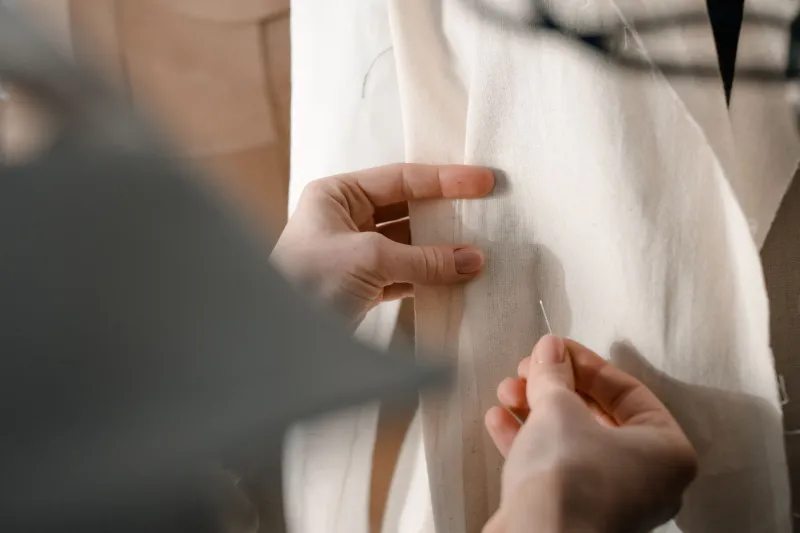
There is a particular sound made by a well-run alteration studio: the hum of a machine between sentences, the rustle of a garment being turned inside out, the occasional murmur of assessment — we can take it in through here, but the shoulder must stay. It is the sound of a wardrobe being thought about, rather than merely acquired.
In a city that has always prided itself on restraint, the alteration studio is enjoying something of a return to centre stage. Not as an emergency service for a dress bought in haste, but as a deliberate stage in how clothes come to belong to us.
The Studio as Second Fitting
Consider the sequence. A garment is chosen with care, tried on under unforgiving light, and purchased. Then — and this is the step gaining ground — it is taken to a tailor before it is ever worn. Hem lengths reconsidered against actual shoes. Waists drawn in or let out. Sleeves adjusted to reveal the right centimetre of wrist.
Practitioners across the city describe the shift plainly. Where once clients arrived with panic purchases the week of an event, they now arrive with considered pieces and a brief: make this mine. The alteration, in other words, has become the second fitting — the one that matters.
What the Practitioners Say
The seamstresses and tailors we spoke with describe their work as a form of translation. A garment cut for an imaginary proportion is translated to a real body. A jacket inherited from a parent is translated to a new decade. A beloved coat, lining gone to shreds, is translated back into service with a reliner — often in a fabric better than the original.
The relining trade in particular has grown quietly. A good coat deserves a second lining the way a good book deserves rebinding. Clients speak of the decision in almost moral terms: the coat was sound; discarding it would have been a lapse of judgement.
Sustainability, Without the Sermon
It is tempting to frame all of this as environmental virtue, and there is truth in it — every garment altered is a garment not replaced, and the arithmetic of textile waste is grim reading. But the Melbourne women driving this habit tend to frame it differently. They speak of fit. Of clothes that feel prescribed rather than purchased. Of the small authority that comes from a sleeve that ends exactly where it should.
Sustainability, in this telling, is a by-product of precision, not its motivation. One client put it neatly: I don't keep clothes to save the planet. I keep clothes because they finally fit.
A Practical Grammar
For those new to the practice, the practitioners offer consistent counsel:
- Prioritise structure. Shoulders, waistbands and closures are worth altering; wholesale re-cutting rarely is.
- Budget honestly. A quality alteration on a quality garment repays itself across a decade of wear.
- Build a relationship. A tailor who knows your proportions is worth more than any size chart.
- Ask about the impossible. Sometimes the answer is no — and a good tailor will tell you before the scissors move.
The Longer Wardrobe
Melbourne has always been a city of the long view — buildings restored rather than razed, coffee treated as craft rather than fuel. The alteration studio belongs comfortably in that tradition. It asks a little more patience of us and returns something increasingly rare: clothes with a history, a fit, and an intention.
The impulse rack will always have its admirers. But the quiet arithmetic of the alteration — fewer purchases, longer lives, better fit — is, for the discerning dresser, the more elegant sum.