Brim Width: Inside Collingwood's Stubborn Hat Studios
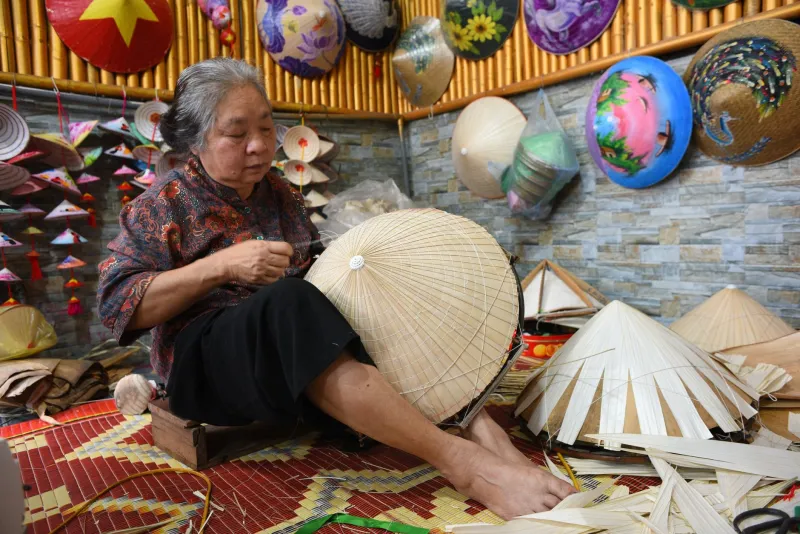
Walk the back streets of Collingwood on a weekday morning and you may pass, without knowing it, the workshops where Australia's hat revival is being stitched together. Steam, buckram, wooden hat blocks scored with decades of use — the milliners of the inner north never stopped making. What changed is that the rest of us started buying.
The Quiet Return of the Brim
For years, the Australian hat lived a double life: ceremonial on Cup day, absent the other 364. The fascinator became a national punchline; the everyday hat, a relic. But a confluence of forces — sun-safety messaging, a broader turn toward considered consumption, and a generation of younger shoppers suspicious of anything disposable — has returned the wide brim to the street.
In her Langridge Street studio, a milliner who trained under one of Melbourne's last department-store hat bars walks us through the shift. "Ten years ago, my customer was a mother of the bride," she says. "Now she's twenty-six, she's read about UV exposure, and she wants something she can wear to the farmers' market. That's a completely different brief."
Her orders tell the story: straw and felt panamas, unstructured and packable, outselling occasion pieces nearly three to one. The hat has moved from the marquee to the footpath.
Reading the UV Index Like a Hemline
Practicality, in Australia, is not the enemy of elegance — it is its foundation. The UV index, published daily by the Bureau of Meteorology and the Cancer Council, should inform brim choice as much as bone structure does.
A workable rule of thumb: a brim under 6 cm is decorative; 7 to 9 cm shades the face, ears and much of the neck; anything beyond 10 cm enters statement territory and, on a windy Bay trail, structural risk. UPF-rated fabrics — tightly woven straw, treated cotton canvas — earn their keep in high summer, particularly between 10am and 4pm when the index climbs past 8.
Choosing a Shape That Suits
The mirror is a poor advisor; proportion is a better one. A few guidelines our milliners offered:
- Rounder faces are flattered by a crown with height and a slightly asymmetric brim, which adds vertical line.
- Longer or narrower faces suit a softer, downturned brim and a lower crown, which shortens the silhouette.
- Square jaws are eased by curved, floppy brims — anything with movement rather than architecture.
- Petite frames should mind the ratio: a vast brim can wear the wearer. A 9 cm brim on a finer straw often reads better than 12 cm on heavy felt.
Fit matters as much as shape. A hat that sits on the crown rather than around it will migrate in the first northerly. Most Collingwood makers will size to the half-centimetre, and a proper internal sizing ribbon is worth requesting.
Care and Keeping
Straw panamas, contrary to reputation, are remarkably forgiving: rolled gently, they recover with steam from a kettle. Felt prefers a hat box and a cool, dry cupboard. Brush wool felt with the nap, never against it, and never — the studio was emphatic — rest a wet hat on its brim. Dry it crown-down over a rounded surface.
There is something fitting about the hat's return in this city. Melbourne has always understood that elegance is mostly a matter of preparation. A wide brim against a February glare is not vanity. It is the quietest possible form of self-respect — and, increasingly, the most Australian thing you can wear.