The Micro-Print Manifesto: Reading a Garment Before You Ever Wear It
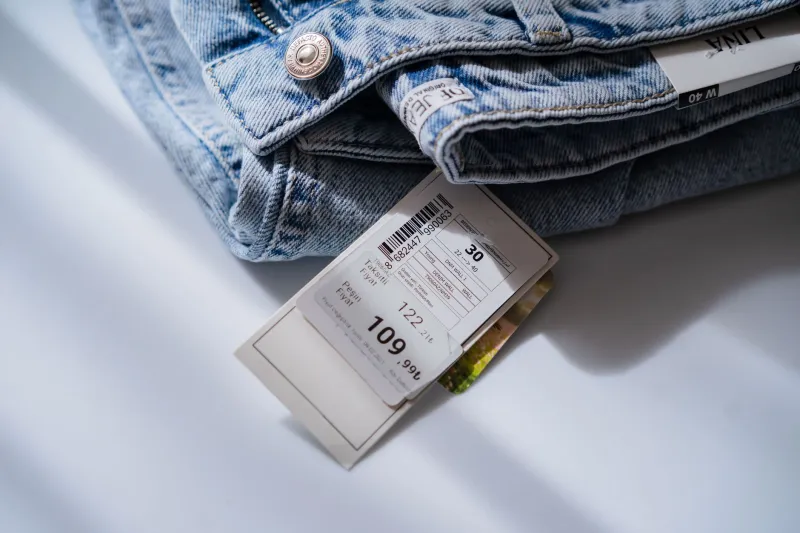
There is a moment, familiar to anyone who shops with any seriousness, that occurs between admiration and purchase. The garment is on the hanger, the light in the change room is forgiving, and the hand is already halfway to the sleeve. Before that hand arrives, Marion Melbourne suggests a small detour: turn the piece inside out and find the tag.
Not the brand label — the other one. The narrow strip of satin or tyvek stitched into the side seam, printed in type so small it seems designed to discourage attention. It is, in fact, the most honest paragraph of prose in the entire store.
What the Law Requires of a Garment
Australia's labelling regime is stricter than many shoppers realise. Under the Commonwealth's Commerce (Trade Descriptions) Act and the accompanying competition and consumer law, most clothing sold here must disclose three things: what the garment is made of, where it was made, and — for imported goods sold under an Australian business name — a registered identification number, the familiar RN followed by digits.
The fibre content must be listed in descending order of weight. A dress labelled 70% wool, 28% nylon, 2% elastane is telling you, in effect, that it is a wool garment with a scaffolding of synthetics — a reasonable construction for structure and stretch, but one that will behave differently in wear and washing than pure wool. A tee boasting a high cotton percentage deserves the follow-up question: combed or carded? Long-staple or short? The tag cannot answer that, but its silence is itself informative. Labels that dwell on provenance tend to belong to makers with provenance to dwell on.
The country of origin must be the place of manufacture, not the place of design. A Melbourne studio that cuts patterns in Collingwood and sews in Portugal must say Portugal. This is not a technicality; it shapes everything from freight footprint to the conditions under which the garment was assembled.
The RN Number, Decoded
The RN — registered number — is perhaps the least understood character in the cast. It identifies the Australian business that imported or sold the garment, allowing regulators and consumers alike to trace accountability. A quick search of that number reveals the entity behind the rack: sometimes the brand itself, sometimes a distributor, occasionally a licensing arrangement that explains why two labels share identical construction and identical tags.
For the discerning shopper, the RN is a thread worth pulling. It distinguishes the label that designs and stands behind its product from the label that is, functionally, a trademark applied to somebody else's container of goods.
Care Instructions as a Character Reference
Beyond the mandatory disclosures sits the care panel, and here the tag becomes something closer to a confession. 'Dry clean only' on a cotton shirt suggests a maker who hasn't considered the garment's life, only its photograph. A wool coat that offers a considered sequence — cool hand wash, dry flat, warm iron under cloth — signals a designer who has worn the piece through a Melbourne winter and thought about it.
Marion Melbourne has long held that a care tag is a design document. The best local studios now treat it that way, rewriting their micro-print in plain, even warm language, adding repair guidance or fibre origin notes. It is a small revolution: the tag as a promise rather than a legal shrug.
How to Shop the Seam
A practical habit, then, for the next hour spent in the arcades of the CBD or the boutiques of Gertrude Street:
- Read the fibre split. Natural fibres first, in high proportion, is the general rule for longevity; elastane above five per cent in a tailored garment is a warning about its future shape.
- Trace the RN. One search tells you who is accountable.
- Interrogate the origin. 'Made in Australia' means cut and sewn here; 'Designed in Australia' means something notably less.
- Judge the care panel. Vagueness here usually mirrors vagueness elsewhere.
None of this replaces the hand, the drape, the fit. But the tag tells you what the garment will become — after the tenth wear, the first wash, the third summer. In a market flooded with garments engineered to survive only until the receipt is discarded, that small strip of printed satin remains the quietest, most reliable form of due diligence available to the Australian wardrobe.